What the market is holding this week
Seasonal Flowers
The owner checks stems at the wholesale market before packing and removes any damaged ones, so the mix shifts across the year. Varieties may change through the seasons, and the stem count in a Petite, Classic or Grand arrangement follows the seasonal mix rather than a fixed recipe.
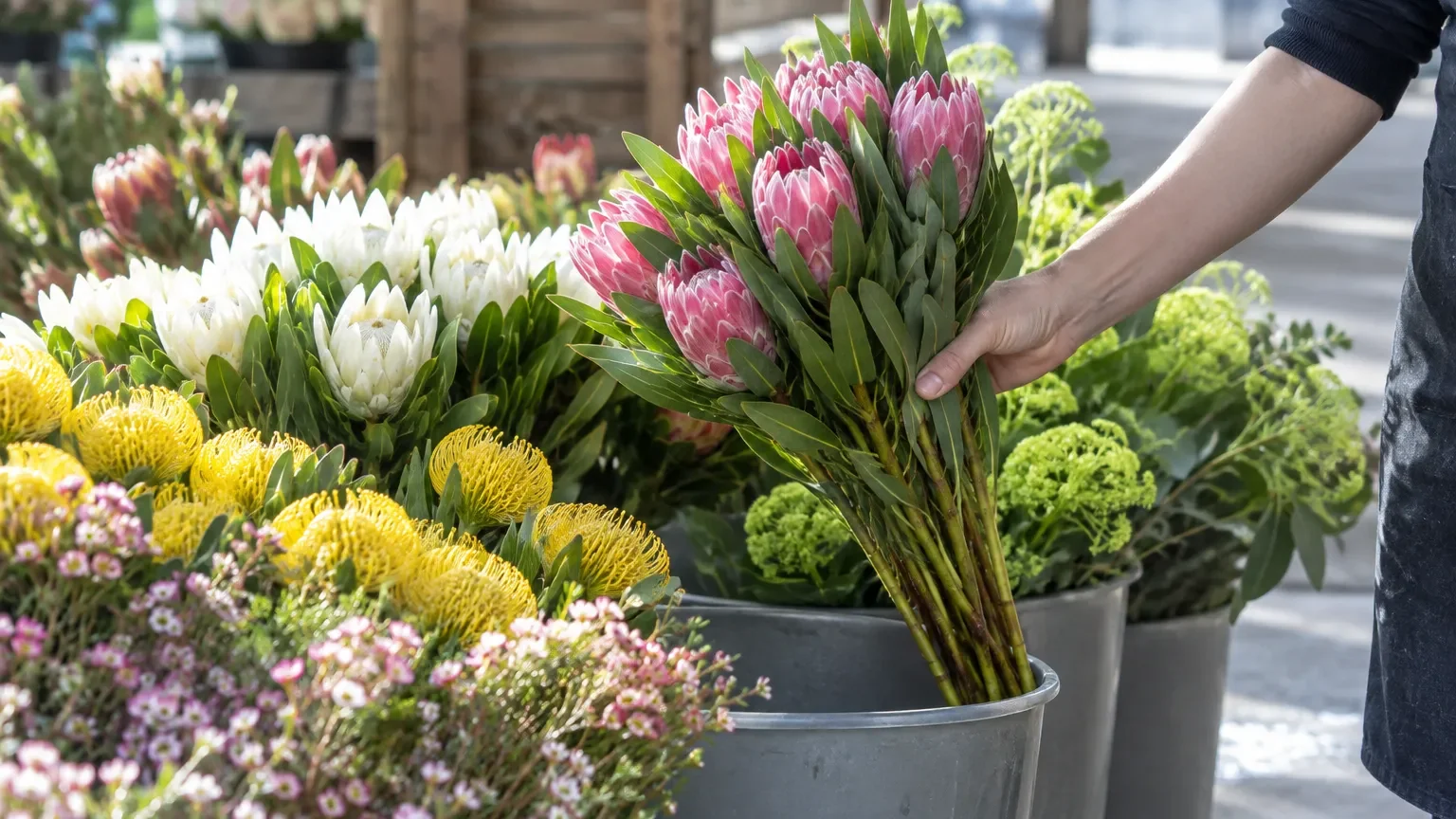
Summer
Through the warmer months the studio works early. Stems are checked at the wholesale market before packing, and anything with a bruised head or a slumping stem is set aside rather than wrapped. Lilies, gerberas and the heavier summer blooms come in at their fullest, which is why a Grand in January carries a very different weight of flower to a Grand in July.
Summer is also the season that asks the most of the flowers after they arrive. Bouquets are built in the hand around a spiral stem structure, wrapped in kraft paper and tied with a single cotton ribbon, so the stems stay enclosed on the trip rather than sitting in a plastic sleeve. Each delivery carries a printed care card: trim 2 cm from each stem, change the water every second day, and keep the vase out of direct afternoon sun.
Colour tends to run bold in summer. If you are ordering for a hot-weather birthday, the bold mixed palette holds up well; soft pastels are easier to keep looking fresh in a cool room than on a kitchen bench by a window.
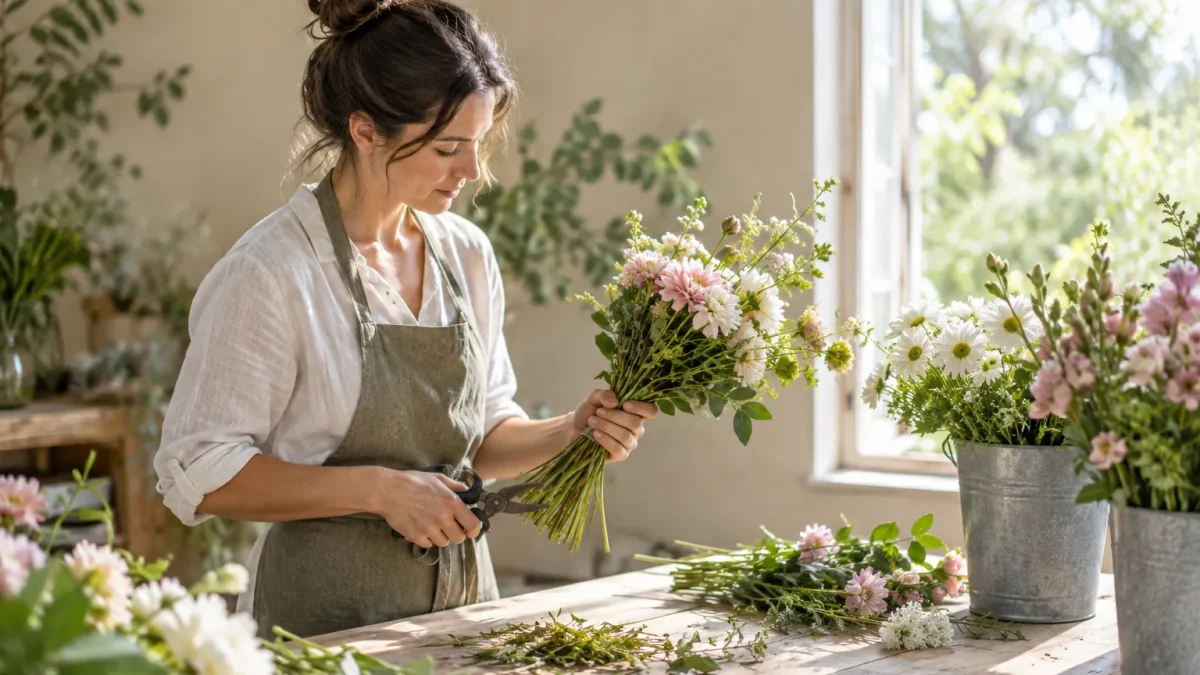
Autumn
As the nights cool, the palette turns. Warm earth tones come into their own — rust, ochre, deep plum — and native stems and foliage start doing more of the work alongside the flowering heads. That combination is what gives an autumn bouquet its shape: the foliage holds the outline while the flowers fill the centre.
Sizes stay listed as Petite, Classic and Grand, but the stem count moves with the seasonal mix rather than a fixed recipe. A Classic built on foliage-heavy stems is a fuller thing than a Classic built on tulips, and the studio adjusts so the arrangement looks right for the size you chose rather than counting to a number.
Autumn is a good stretch for the ceramic vessels. A ready-to-place arrangement in a ceramic or a clear glass vase needs no fussing on arrival, which suits a thank-you gift left at a reception desk or a kitchen table on a Friday.
Winter
Winter flowers tend to be sturdy and long-lasting, and the cooler air at home works in their favour — a vase kept away from a heater will hold its blooms noticeably longer than one in a warm room. Crisp whites and greens are the natural fit for the season, and lilies in particular open slowly over a week or more, changing the shape of the arrangement as they go.
Growth is slower, so the range narrows a little. Each flower category on this site carries a seasonal availability note, because varieties do change through the year and a stem you saw in June may not be at the market in August. When something is between crops, the studio works within the palette and size you have chosen rather than sending a bouquet that reads as a different arrangement.
The wrapping matters more in the cold months than people expect. Kraft paper tied with cotton keeps the stems protected on a doorstep without sealing them in, and the small kraft tag carries the arrangement's name — something like “Quiet Corner” — so the recipient knows what they are looking at.
Spring
Spring is the season the studio plans around. Tulips arrive in quantity, seasonal blooms start appearing in colours that were not available a month earlier, and the soft pastel palette finally has the stems to support it. It is also the most changeable stretch of the year, since a warm week can bring a crop forward and a cold snap can hold it back.
Because of that, spring orders are best treated as a conversation about style and colour rather than an exact list of flowers. Tell us the palette you have in mind and the size — Petite, Classic or Grand — and the reply will list what is genuinely available around your delivery date instead of showing stock that may not exist by then.
Spring arrangements are lighter in the hand: fewer heavy heads, more air between stems. Built on the same spiral structure, they sit easily in a clear glass vase and hold their shape without floral foam doing the work.
Tell us the date you need it
Send the arrangement style you like, the recipient’s suburb, your preferred delivery date and the message for the card. We will reply with the styles, sizes and delivery options available for that suburb and date, and confirm before anything is cut.
Send an enquiry